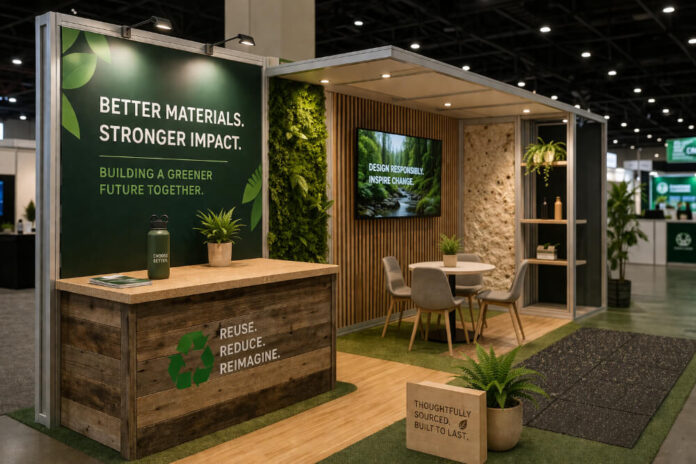
Old ways of building big booths for short events and tossing them out don’t fit today’s business mindset. Backed by 2026 trends, lasting impact comes not just from doing what’s right, but also boosts how strong a brand looks and runs. Firms we work with now look first at those who prove they reuse, reduce, and repair. Swapping single-use parts for earth-safe ones shifts our displays from throwaway setups to durable statements that stand firm, day after day. Choosing natural textures and recycled bones inside, this silent stand speaks louder than words ever could about where we’re headed. Heavy traffic zones still perform without waste piling up behind the scenes, especially with professional custom trade show exhibits designed for longevity and environmental responsibility.
The Strategic Material Toolkit for Sustainable Exhibits
1. Recycled Aluminum Framing Systems
We choose aluminum first when building frames, thanks to how well it retains its strength after being recycled again and again. Because reused material makes up so much of these structures, far less energy goes into each build. What stands out is how strong yet light the metal feels. This means big, intricate forms can remain easy to move, reducing fuel needs and transport costs along the way. When events come around time after time, trust comes from knowing the setup holds firm, looks sharp, and performs just right.
2. PVC Free Tension Fabric Graphics
Older types of banners made from vinyl or PVC harm the environment because dangerous chemicals are released during production and disposal. Our move to fabric displays uses rPET, which comes from used plastic bottles, giving discarded materials a new purpose. Colors appear sharp and rich on these surfaces, helping people remember what they see. Since the textiles weigh less and can be folded small, shipping needs far fewer resources than before. Even though it looks clean and high-quality, every part fits into a cycle in which nothing becomes waste.
3. FSC Certified and Reclaimed Timber
Wood brings the warmth we value, so we pick FSC-certified species or reclaimed planks instead. A standard particle board stays out because it often contains harmful glues. Responsibly grown trees or old buildings become new sources of material through care. Our booth builds are pleasing to the eye while keeping the air quality safe by choice. Old wood adds stories modern synthetics cannot match in feel or depth. People respond differently when touch meets history, not factory lines.
4. Bio-Based and Mycelium Structural Panels
Inside our booths, mushroom-like fungus structures now shape wall sections alongside slabs made from squeezed farm leftovers. Not only do they break down naturally after use, but they’re also pulling carbon from the air. Sound moves more slowly and more softly through these plant-rooted surfaces, which helps quiet the nearby chaos. Hushed zones form where buyers can think without shouting across tables. What grows from soil returns to it, leaving almost nothing behind. Each piece fits together like parts of something alive, responding to noise while standing firm under touch. This shift doesn’t shout progress; it simply behaves as if the future has already arrived.
5. Sustainable Flooring: Cork, Bamboo, and Recycled Rubber
Most of our exhibit’s surface sits underfoot, so picking strong, fast-growing materials matters. Not just tough but kind to tired legs, cork and bamboo grow back fast and feel soft during long shifts. In busy areas where people move constantly, small blocks from old tires click together tightly. Team members stand for hours yet remain more alert when the ground beneath them supports them well. Energy spreads more easily when feet feel steady.
6. Water-Based Low VOC Finishes and Adhesives
That familiar new booth odor usually means VOCs are seeping out where people work. Because of this, only water-based paint gets used alongside glue without formaldehyde to keep spaces safe. Avoiding harsh substances helps guests feel comfortable enough to stay longer. Cleaner materials mean better indoor air quality, which quietly shows how detail-oriented the operation really is.
8. High Efficiency LED and Low Energy AV Integration
Though it isn’t something you can hold like wood or metal, electricity shapes how green our display feels. Our lights run on efficient LEDs that need far less juice than old-style bulbs, sometimes using only a fifth of what was once normal. Equipment for sound and visuals is carefully selected: models rated highly by Energy Star often come with features that reduce waste when idle. Good light matters, yes, but getting there quietly, without draining resources, shows strength just as clearly. Working with experienced trade show exhibit companies ensures these sustainable strategies are executed flawlessly while maintaining maximum visual impact.
Final Thoughts
Picking earth-smart materials for custom displays isn’t just about looks; it shows what a brand truly stands for. Moving past trendy slogans, real change comes through choices like reclaimed aluminum and plant-made boards, because lasting impact grows from deliberate steps. Strong companies act on belief, shaping spaces that mirror who they really are. These seven green foundations shape how events run smoothly, steadily, and in a forward-thinking way by design. A stand built on honesty does more than attract eyes; it earns confidence without a word.


