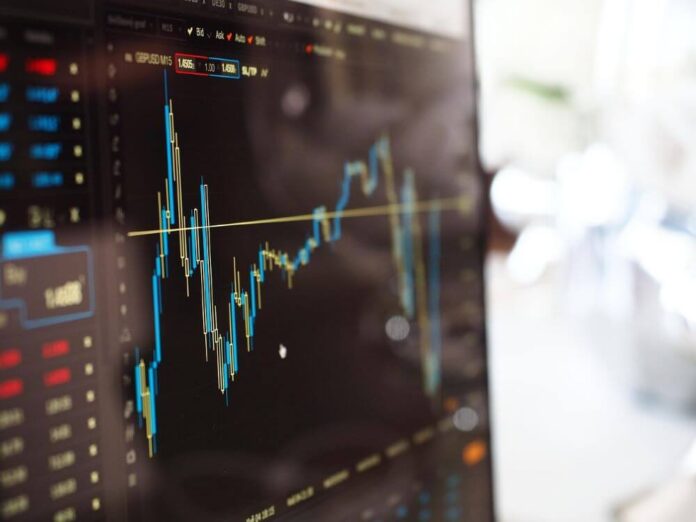
Trend trading has always been about recognising the dominant market direction and positioning accordingly. What has changed is the sophistication of the tools available to do it. Traders now have access to advanced indicators that can combine price action, momentum, and volatility into a single view, making it easier to filter noise from meaningful signals.
The goal is not to find a magic formula that never fails, as no indicator offers that, but to refine decision-making so entries and exits align more consistently with market structure. When used properly, advanced indicators can help traders identify turning points earlier, hold positions through trend continuations, and avoid getting caught in choppy, directionless price action.
Why Rely on More Than Price Alone
Price is the ultimate truth in trading, but it is also reactive. By the time a major move is visible on a chart, much of the initial momentum may have already played out. Indicators help bridge that gap by processing historical data into patterns that can suggest probable future behaviour.
Used thoughtfully, they can:
- Highlight support and resistance levels
- Reveal hidden momentum shifts
- Confirm breakouts or trend reversals
- Provide structure for stop-loss placement
However, their value depends entirely on context. The same signal can be profitable in one environment and misleading in another.
The Ichimoku Cloud Strategy
One of the more sophisticated tools in trend trading is the Ichimoku cloud strategy. Unlike single-line indicators, Ichimoku presents a multi-layered view of price action, incorporating trend direction, momentum, and projected support and resistance in one glance.
Its main components include:
Kumo (Cloud) – an area showing potential support or resistance zones and the broader trend bias
Tenkan-sen and Kijun-sen – short- and medium-term moving averages that signal momentum shifts and trend confirmation
Chikou Span – a lagging line comparing current price to past price for additional confirmation
When price is above the cloud, with Tenkan-sen above Kijun-sen, the market is considered in an uptrend. The opposite applies for downtrends. Crosses inside or near the cloud can signal possible transitions, though these require careful confirmation to avoid false entries.
Strengths and Weaknesses
Ichimoku’s strength lies in its ability to provide multiple perspectives at once. It can show whether the market is trending, how strong that trend is, and where potential support and resistance lie without switching between indicators.
However, there are trade-offs:
- In sideways markets, signals can be unreliable, producing whipsaws.
- The cloud’s forward projection is helpful, but not predictive; it’s still based on historical price data.
- New traders may find the multiple lines and colours visually overwhelming without proper study.
In short, Ichimoku excels in trending markets with clear direction, but can be less effective when the price is consolidating.
Ideal Market Conditions for Advanced Indicators
For Ichimoku and similar trend-focused tools, the best results usually come when:
- Price has broken out of a well-defined range
- There is clear separation between moving average components
- Broader fundamentals support the trend (e.g., central bank policy or strong earnings cycle)
- Volume confirms directional moves
In conditions where price is range-bound or news-driven volatility dominates, it can be more effective to step back and wait for a clearer structure to form.
Combining Indicators Without Overcomplication
Advanced traders often pair Ichimoku with other tools to enhance accuracy. Momentum indicators like the Relative Strength Index (RSI) or the Moving Average Convergence Divergence (MACD) can confirm the strength of a trend identified by the cloud. Volume-based indicators can further validate whether a breakout has conviction.
The key is avoiding “indicator overload”. Layering too many tools on a chart can lead to conflicting signals and hesitation. A better approach is to choose complementary indicators that each serve a distinct purpose, for example, one for trend direction, one for momentum, and one for volatility.
Best Practices for Using Advanced Indicators
- Understand each component – know what the indicator measures before acting on it.
- Test in different environments – see how signals perform in trending versus ranging markets.
- Use multiple timeframes – align short-term setups with the broader trend.
- Confirm with price action – never rely solely on indicator signals.
- Adjust settings if necessary – standard defaults may not suit all instruments or timeframes.
- Limit the tool count – focus on quality of signals, not quantity.
The Psychological Advantage
One often-overlooked benefit of advanced indicators is their ability to impose structure on decision-making. For example, a trader following Ichimoku rules might avoid entering a trade unless the price is clearly above the cloud with supportive momentum. This predefined checklist reduces the temptation to trade on impulse or emotion.
Timeframes and Trade Management
Advanced indicators can be adapted to multiple timeframes, but the choice should match the trading style. A day trader may use a 5-minute chart to catch intraday trends, while a swing trader might look to 4-hour or daily charts to identify multi-day opportunities.
Trade management remains critical. Even the most reliable indicator cannot guarantee outcomes, so stop-losses and position sizing must be part of every plan. For Ichimoku traders, stops are often placed just beyond the cloud or key moving average lines to give trades room to develop while limiting downside risk.
Integrating into a Broader Strategy
Indicators work best when integrated into a complete trading framework that includes market analysis, risk management, and ongoing review. This means:
- Defining when and why trades are taken
- Knowing the specific market conditions where the indicator works best
- Accepting when conditions are unfavourable and stepping aside
- Reviewing trades regularly to spot patterns in wins and losses
By taking this disciplined approach, indicators move from being “trade triggers” to becoming part of a cohesive method that can adapt as markets evolve.
Market Access and Execution
An indicator strategy is only as effective as its execution. If signals are acted upon too slowly due to poor market access, the edge can disappear. Many traders choose to work with providers like ThinkMarkets for fast order execution, reliable charting platforms, and real-time data. Reliable execution means that when a valid signal appears, traders can enter the market without worrying about delays or slippage undermining the setup.
Turning Data into Decisions
Remember, no indicator works in isolation. The real edge comes from knowing when its signals align with the market’s broader context, and having the discipline to follow a tested plan. When combined with strong risk management and reliable execution, advanced indicators can move from being “helpful” to being an integral part of consistent trading performance.


