The effects of climate change are frequently noticed in the context of food insecurity, as droughts, flooding, and an increase in the number of pests and diseases (as well as the introduction of new ones that hadn’t been present in the ecosystem before) can significantly reduce yields if not destroy them completely.
Several staple foods, including soybeans, rice, corn, and wheat, have been severely impacted, while other crucial food items like coffee, chocolate, potatoes, tomatoes, olive oil, apples, mangoes, grapes, and peanuts have been harmed by the extreme heat, droughts, and highly altered rainfall as well. Prices and global food security have been severely impacted as a result, as essential nutrients and popular treats alike are no longer accessible to many people.
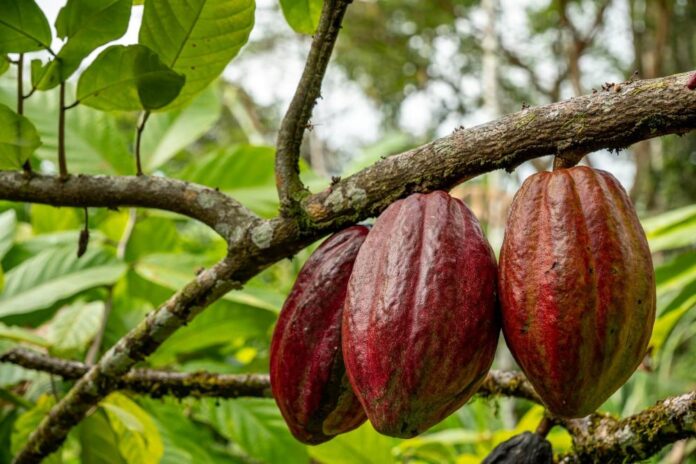
The cocoa crisis became an even more serious issue last year, as prices began recording steep fluctuations in June and reached their peak in December 2024. The situation occurred after several growing seasons in West Africa had already been impacted by weather and disease. Some people have compared the situation to the lipstick effect, a scenario in which luxury products that are relatively affordable retain their sales even throughout economic downturns.
The overview
Cocoa ingredients such as cocoa powder, butter, beans, specialty fats, and liquor are fundamental for many different desserts that simply couldn’t be created in their absence. Approximately 60% of these products come from the Ivory Coast and Ghana, where most of the world’s cocoa crops are located. In both countries, the production rates have been considerably impacted over the last few years as a result of global warming. The global climate phenomenon known as El Niño has been cited as a culprit as well.
In Ghana, more than 80% of the Western North Region has been affected by the cacao swollen shoot virus. This pathogen decreases the yield about three years after the infection has settled in and succeeds in killing the plant completely within only a few years. Hundreds of millions of trees have already been claimed by CSSV, leading to Ghana launching one of the most expensive and ambitious eradication efforts ever seen against a viral plant disease.
CSSV and climate change
Cacao swollen shoot virus kills trees within three to four years after infection. The main symptoms include root necrosis, leaf chlorosis (a condition that means the leaves are unable to produce sufficient chlorophyll) or red vein banding in the case of younger leaves, and swelling in the root and stems. The virus is mainly transmitted by mealybugs, many species of which are becoming more resilient and capable of thriving for longer due to warmer weather.
Light intensity can reduce swelling in infected trees, as studies show that those that are in the shade tend to exhibit much more severe symptoms. Nutrition has no significant effect, but the number of ants is important, as they are known to protect the mealybugs as part of a mutualistic relationship that gives them access to sugar exudates. If cacao trees are located very close to one another, something that is the case in many areas, as farmers try to increase profits and keep up with increasing living costs, the infection spreads even faster.
When canopies are interlocked, it is much easier for the bugs to go from one plant to the other. When the weather is dry and windy, mealy bugs can travel for up to 340 feet, spreading to trees that are quite far away from the ones where they were originally located. Removing the infected trees is the most common means of dealing with CSSV, but it’s important that this is done before new trees are planted. A gap should be left around the new plants, with new trees at least 10 meters away from old ones being the recommended distance.
Global effects
The International Cocoa Organization estimated that the 2023/24 season closed with a deficit of 489,000 tons, with stocks likely hitting the lowest levels recorded in nearly five decades. The chocolate industry is worth around $130 billion, with projections indicating that it could approach the $200 billion milestone by 2030 if growth remains consistent. However, given the challenges that the market will most likely end up dealing with, the future remains fairly uncertain.
The price surges as a result of lower crop yields have trickled down to the consumers as well in the form of price increases in the finished products, shrinkflation, and ingredient substitutions that are often of a lower quality. Some companies have begun expanding into non-chocolate products as well, while others have begun making chocolate that doesn’t use any cocoa at all. Carob is the most popular alternative, but sunflower and oat seeds can be used as well. However, these products are typically not labeled as chocolate, as most countries have legal requirements in place that require a specified minimum proportion of cocoa mass.
And while some of these strategies can indeed work and increase revenue for the large corporations, small businesses, and craft chocolate makers are much more likely to deal with difficulties when attempting to introduce them. Their products require high-quality cocoa beans. Sourcing becomes more challenging under these conditions as well, as it takes time to establish partnerships and the adequate infrastructure in order to come up with the best solutions. As companies become more sustainable, they’re also trying their best to join forces with producers that maintain ethical and environmental standards as well.
Smaller producers across all parts of the industry are more likely to deal with issues as the raw materials become scarcer and more expensive. Over the long term, the incentive to obtain high-quality ingredients and maintain adequate processes will probably decrease as well, as businesses struggle to make ends meet.
The bottom line
Cocoa shortages are, unfortunately, not a new development, but one that has become increasingly troublesome over the years. As the effects of climate change become more exacerbated, it is increasingly challenging for companies to keep up with demands as well.
It is clear that new solutions and strategies are needed, so that the industry continues to deliver but manages to do so in a wholesome and sustainable environment that cares about everybody.


