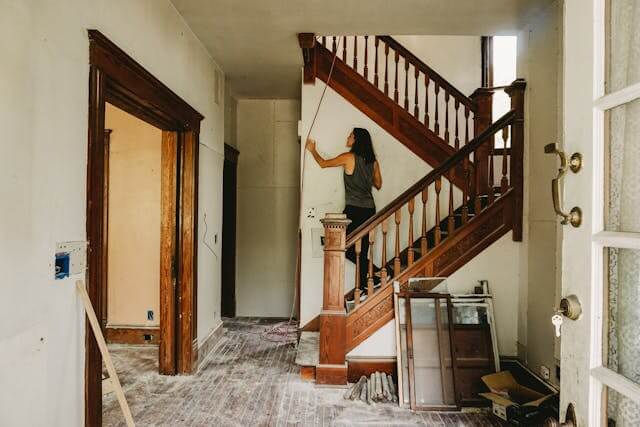
Have you ever written down every little thing you want to improve about your home… and gotten a little nauseous?
That’s normal. A renovation wishlist is a lot of fun to make. New kitchen, new bathroom, knock through that wall, finally replace those tired old doors. Then the quotes start coming in and the fun part is over.
Here’s the problem:
Typically, there is a skip from “wishlist” to “builder quote”. There is no “middle bit”. That’s where the budgets blow out.
In this article, you will learn how to convert a messy wants list into a well-behaved spending plan that works when it meets actual prices.
What’s inside:
- Why Most Renovation Budgets Go Wrong
- How To Turn Your Wishlist Into Real Numbers
- The “Must / Should / Could” Method
- Where To Cut Without Hating The Result
- Building In A Buffer For Surprises
Why Most Renovation Budgets Go Wrong
Let’s first consider what causes budgets to fail before we attempt to fix the budget.
Remodelling costs in the UK are not low. According to the latest reports, the average home renovation cost is from £1,200 to £2,800 per square metre in 2025, a huge spectrum. The first trap is there. Someone chooses a number from the lower end and declares it the budget.
It isn’t a budget. It’s a guess.
Same with door installation price. If you’re adding French doors to your list, you have to price them accurately because they fall into that in-between “bigger than a window, smaller than an extension” category. The cost to install French doors includes the unit, fitting and any work to the wall or frame. Loads of people throw a door installation price guesstimate in and get stung when it comes to quote day.
Here are the three main reasons wishlists turn into financial mess:
- You priced the dream, not the job — you got the cost of the taps but forgot the plumber, the tiles, the waste removal and the VAT.
- You ignored “old house” surprises — dodgy wiring, damp, soft joists, the lot.
- You didn’t rank anything — so it’s all important and nothing needs to be cut back when we need to cut back.
Studies have found that 2 in 5 renovators go 20% over budget. That’s not a bit of bad luck. That’s bad planning.
How To Turn Your Wishlist Into Real Numbers
Right. Time to do the maths.
Step 1 is brutal but simple: Assign a real price to every item on your list. Not a vibe. A price.
Here’s how to do it properly:
- Specify everything (including the seemingly insignificant things such as skirting and light switches).
- Split the list into rooms.
- Next to each item, write a realistic mid-range UK price.
- Add 20% for labour where it applies.
- Total it up.
Expect a shock. That’s kind of the point.
Some useful anchor prices to work from:
- A new kitchen: £10,000 — £20,000 for a mid-range finish
- A new bathroom: around £6,000
- A new boiler: roughly £2,700
- Windows, doors and glazing: varies with size and material
Do this for every room.
The “Must / Should / Could” Method
Now you’ve got a big total that’s probably bigger than your actual money.
Time to make choices.
This is the simplest way to rank a wishlist without killing the dream.
Here’s how it works:
- Must — stuff that has to happen. Safety, structure, things that stop the house working. Think dodgy wiring, leaking roof, broken boiler.
- Should — stuff that adds real value or quality of life. A proper kitchen, better insulation, replacing tired doors and windows.
- Could — the nice-to-haves. The fancy tap. The fluted glass. The underfloor heating in the utility room.
Go through your list and assign a label to each item. No item is allowed to be a “Must” unless it would be a catastrophe if you did not do it.
You’ll find that perhaps 40% of your list is really “Could”. That’s not a problem — that’s your flex room for when prices come in high.
Where To Cut Without Hating The Result
Trimming a wishlist is difficult, because every item seemed necessary when you wrote it.
But here’s the thing…
Not all cuts are created equal. Some save you money and you never miss it. Some save you money and you make the decision every day for the next 15 years.
Smart cuts usually look like this:
- Keep the layout, change the finishes
- Reuse good-quality existing items (doors, radiators, flooring) where possible
- Go mid-range on things you’ll replace in 10 years anyway
- Phase the work — do the “Musts” now, “Shoulds” in 12 months, “Coulds” later
Bad cuts usually look like this:
- Skimping on structural work, wiring, or plumbing
- Going cheap on windows, doors and insulation (you’ll pay in energy bills forever)
- Buying the cheapest version of anything you’ll touch every single day
Rule of thumb: cheap decisions early are expensive decisions later. Moving a drain on paper is a piece of cake. Moving it after the kitchen has been fitted is a nightmare.
Building In A Buffer For Surprises
Last bit. And maybe the most important.
Your budget isn’t finished until you’ve added a contingency pot.
Why?
Old houses are full of surprises and new houses are full of little defects. Something will go wrong. A wall won’t be plumb. A pipe will be in the wrong place. The door frame will be rotten. You just need to be prepared.
The usual rule of thumb is to budget an additional 10–15% contingency over and above your total budget. For larger or older properties, aim towards 20%. This money remains unspent unless a real disaster occurs.
If you never use it, that’s great. If you do use it, you’re still on budget and you haven’t had to cut half your wishlist to pay for it.
FYI: inflation has been brutal. Renovation costs increased by ~6.5% in the 2025 index which means if you received quotes last year, they are now inaccurate. Price against today’s rates at all times.
Final Thoughts
Turning a renovation wishlist into a realistic budget is no glamour job. It’s spreadsheets, brutal honesty and bruised egos when your dream kitchen is double what you expected.
But it’s the thing that distinguishes renovations that come together from ones that run out of cash halfway through and sit as half-finished rooms for years.
Quick recap:
- Get real prices on every wishlist item
- Rank everything as Must / Should / Could
- Cut finishes before you cut quality and structure
- Add 10–20% contingency on top
- Price against today’s rates
Do this right and your wishlist goes from wishful thinking to a vision. And a vision is the only thing that can ever be built.


