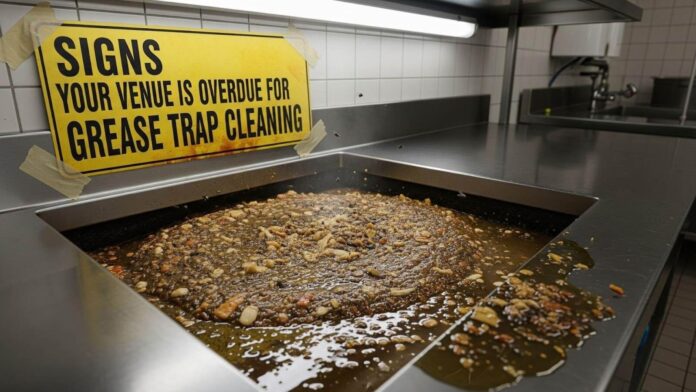
Grease trap cleaning is one of those essential maintenance tasks that many Australian hospitality venues put off for as long as possible.
It sits out of sight, rarely thought about until something goes very wrong. When it does go wrong, the consequences can be expensive, unpleasant and highly disruptive to daily operations.
For cafés, restaurants, pubs, clubs and commercial kitchens, keeping grease traps clean is not optional. It is a legal, operational and hygiene requirement.
Knowing the warning signs that your venue is overdue for grease trap cleaning can help you avoid blocked drains, foul odours, pest infestations and compliance issues.
This guide breaks down the most common indicators that your grease trap needs immediate attention, and why regular grease trap cleaning should be part of your standard maintenance schedule.
Persistent Unpleasant Odours in commercial kitchens
One of the earliest and most obvious signs that grease trap cleaning is overdue is a lingering smell coming from sinks, drains or floor waste areas.
As fats, oils and grease build up inside the trap, they begin to decompose. This process releases sulphur compounds that create a strong, rotten smell.
In a busy commercial kitchen, these odours can quickly spread into food preparation areas and even dining spaces.
Aside from being unpleasant for staff and customers, strong smells can harm your venue’s reputation.
If air fresheners or drain rinses are no longer masking the issue, the problem is almost certainly inside the grease trap.
Regular grease trap cleaning removes decomposing waste before it has a chance to smell, helping maintain a clean and professional environment.
Slow Draining Sinks and Floor Wastes
Slow drainage is another clear indicator that grease trap cleaning is overdue. As grease accumulates, it restricts water flow through the trap and into the sewer system.
Over time, this restriction worsens, causing sinks to drain slowly or back up altogether.
In Australian commercial kitchens, where large volumes of wastewater are produced daily, even a partial blockage can escalate quickly.
Staff may notice water pooling around floor drains or sinks taking longer than usual to empty. These are not minor inconveniences.
They are warnings that the grease trap is nearing capacity.
Ignoring slow drainage often leads to full blockages, emergency plumbing callouts and potential shutdowns during service hours.
Grease Trap Waste and Food Waste Escaping into Drains
When a grease trap is overdue for cleaning, it can no longer effectively separate grease from wastewater.
This allows fats, oils and food solids to pass through into downstream pipes.
Over time, these materials harden and adhere to pipe walls, increasing the risk of major blockages.
If your plumber has mentioned grease build up further down the line, or if you have experienced repeated drain issues despite clearing surface blockages, the grease trap itself is likely the source.
Proper grease trap cleaning removes accumulated waste before it escapes and causes larger plumbing problems.
Increased Pest Activity Around Waste Areas
Pests are drawn to grease, food waste and stagnant water. An overdue grease trap creates an ideal environment for cockroaches, rodents and flies.
Even if your venue maintains high cleaning standards elsewhere, a neglected grease trap can undermine pest control efforts.
Staff may notice increased insect activity near drains, bins or external grease trap access points. In Australia, where warm temperatures accelerate decomposition, this can become a serious issue very quickly.
Routine grease trap cleaning reduces odours and food residue that attract pests, helping your venue stay compliant with health regulations.
Overflowing or Visibly Full Grease Trap
In some cases, the warning signs are impossible to ignore. An overflowing grease trap is a clear indication that cleaning is long overdue.
This may present as wastewater backing up through inspection points or grease spilling into surrounding areas.
External grease traps may show visible layers of solidified fat or sludge near the surface. Internal under sink traps may leak or emit strong smells.
Once a trap reaches this stage, it is no longer functioning as designed.
Overflowing grease traps pose environmental risks and can result in fines from local councils or water authorities. Immediate grease trap cleaning is essential to prevent further damage.
Staff Complaints and Operational Disruptions
Kitchen staff are often the first to notice issues caused by overdue grease trap cleaning.
Complaints about smells, slow drainage or unpleasant working conditions should be taken seriously. These issues affect morale, efficiency and workplace safety.
Operational disruptions such as having to stop dishwashing, clean up wastewater spills or manage emergency plumbing repairs all point to underlying maintenance problems.
Proactive grease trap cleaning prevents these disruptions and supports smooth daily operations.
Why Regular Grease Trap Cleaning Matters
Grease trap cleaning is not just about avoiding bad smells or blockages. It protects your plumbing infrastructure, supports food safety, reduces pest risk and ensures compliance with Australian regulations.
Regular servicing also extends the life of the grease trap itself, reducing long term costs.
Most commercial kitchens require grease trap cleaning every one to three months, depending on size, usage and council requirements. High volume venues may need more frequent servicing.
Choosing the Right Grease Trap Cleaning Services
An effective grease trap cleaning schedule is based on actual usage rather than guesswork. Professional service providers can assess your trap size, kitchen output and waste load to recommend an appropriate frequency.
Keeping detailed service records is also essential. These records demonstrate compliance and help identify patterns that may require adjustments to cleaning intervals.
Do Not Wait for a Grease Trap Maintenance Crisis
By the time a grease trap causes visible problems, the damage is often already done. Emergency repairs, lost trading time and unhappy customers are far more costly than routine grease trap cleaning.
Recognising the signs early allows you to act before issues escalate. If your venue is experiencing odours, slow drains, pest activity or inspection concerns, it is time to review your grease trap cleaning schedule.
Investing in regular grease trap cleaning is an investment in the health, reputation and longevity of your business.


