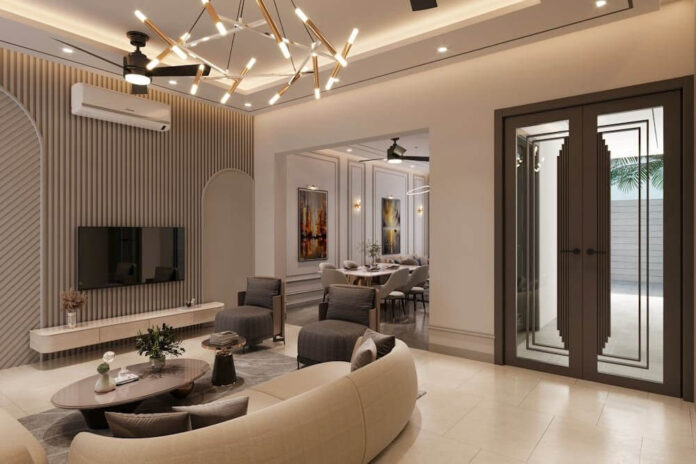
Ever wished you could make your home look and feel more luxurious without remodeling the entire space?
You’re not alone. That’s why most homeowners choose to upgrade paint colors, replace furniture or invest in new flooring.
However…
One thing they often overlook
Lighting.
Don’t worry, this isn’t about convincing you to redecorate every room with chandeliers. Far from it actually. When done right, lighting can help enhance whatever style you prefer – whether it’s modern chandelier designs or simple pendant lights.
There’s just one problem.
Most people think of lighting as a one-and-done proposition. One fixture in the center of the room just to brighten things up.
It doesn’t have to be that way.
Layering your lighting is a trick home stagers and interior designers have been using for years.
When you light a room from multiple angles and at different levels it adds depth. Not to mention drama.
Suddenly your plain old family room doesn’t just feel like a room with nice furniture. Now it’s cozy. Welcome. And looks like something out of Pottery Barn’s catalog.
You may have already heard the term ‘layered lighting design’.
It’s a pretty simple concept that anyone can do. And the results speak for themselves.
Let’s dive in.
You’ll learn
- Why Layered Lighting Beats Basic Lighting Design
- Three Layers of Lighting Every Room Needs
- Best Modern Chandelier Designs For Everyday Living Areas
- Easy Ways To Add Layered Lighting Room By Room
How Layered Lighting Beats Basic Lighting Design
Ok, so get this…
Ever walk into a room that’s only lit by a single overhead light? How does it make you feel? Pretty cold right?
Rooms with only overhead lighting look flat. Because there is only one light source everything else gets washed out.
That is not an inviting space.
That’s where layered lighting comes in.
Instead of relying on one central fixture, layering uses different types and sizes of lighting spread throughout an entire room. Not only does it make the room feel more spacious, but it also creates an atmosphere.
Another bonus?
Layered lighting also happens to be better for property value.
Per a recent survey from the NAHB, lighting ranked in the top tiers of ‘essential’ or ‘desirable’ features for home buyers. In fact, 87% of buyers looked for some kind of lighting when shopping for a home.
That is huge.
Believe it or not the numbers get even better.
A study from Redfin found that when recessed lighting was updated, homes sold around 1.5% higher than listing price. Compared to homes without updated lighting.
Example: A nice family home costs around $400,000. Spend $1,000 on adding some modern pendant lights and voila. You’ve just increased your ROI by $6,000.
Think modern chandelier designs can’t have that kind of impact? Take a look at these dining room chandeliers and tell yourself you didn’t drool a little over that last modern farmhouse-style fixture.
There you have it.
The 3 Layers of Lighting Every Room Needs
As you might have guessed, there is no magic bullet for successful layered lighting. Every room needs three types of lighting layers working together. Miss one and your hard work will not shine quite as bright.
Ambient Lighting
Ambient refers to the overall lighting of a room. It’s what you think of when you walk into a space and just use the ‘light on’ setting on your wall fixture.
Most ambient lighting includes:
- Ceiling-mounted fixtures
- Flush recessed downlights
- Centerpiece chandeliers or large pendants
- Track lighting
You could fill a room with fancy lamps, but without strong ambient lighting it won’t matter.
Task Lighting
Task lighting does what it sounds like; provides lighting you need to ‘perform a task.’
Reading? Task lighting. Preparing dinner? Task lighting. Sitting at your computer? You guessed it…
Task lighting covers:
- Under cabinet kitchen lights
- Desk lamps or reading lights
- Pendant lighting focused on kitchen islands/countertops
- Bathroom vanity lights
Does your room have enough light to actually use the room? Task lighting can ensure that.
Accent Lighting
Ah, finally. The fun part.
Accent lighting is exactly what it sounds like. These are the fixtures you use to show off that quirky painting your grandma gave you or a collection of funky knick-knacks.
Think of accent lighting as the jewelry of your lighting design.
Includes:
- Wall sconces
- LED strip lights
- Picture lights
- Uplighters in corners
Oh and one more thing…
This is the layer most people skip.
Accents are what separate your lighting plan from every other room on the market. Done correctly it will make your walls pop and your furniture shine.
Skip this step at your own peril.
Best Modern Chandelier Design To Anchor Your Lighting Plan
No layers of lighting are complete without a statement piece to bring it all together.
That statement piece should always be a chandelier.
Don’t knock it till you try it. Not every room in the house needs a shiny new light fixture hanging from the ceiling. But there is something about a well-placed modern chandelier design that can set the tone for any room.
Modern chandelier designs these days are more than your great-grandma’s oversized balcony light. Whether you prefer a modern farmhouse or going for an industrial vibe, there’s a style and shape to match every space.
Oh and they also happen to be the best ambient light source you can use. Remember the section on layering? Lighting anchors both your lighting plan and the mood you want to set. Family rooms and gathering spaces benefit the most from this strategy.
Just make sure that when choosing a modern chandelier design that it matches the scale of the room.
Buy something too small and it gets lost. Too big and it will swallow the room.
Easy fixes.
Easy Ways To Layer Lighting In Your Home Room By Room
Still feeling overwhelmed? The best way to start is by breaking it down room by room.
Here is a quick cheat sheet:
Kitchen – Use recessed ambient lighting. From there add under cabinet lighting for countertops. Top it all off with pendant lighting over the island.
Living Room – Similar to kitchens, start with ambient lighting from a central fixture. Use floor lamps or table lamps for added task lighting in seating areas. Wall sconces or LED strip lights help accentuate things like media cabinets.
Dining Room – Throw in a chandelier for ambient lighting. But don’t forget to add a dimmer switch. Then use wall sconces or a lamp on your buffet for some accent lighting.
Bedroom – Mix overhead ambient lighting with some bedside task lamps. Add some subtle accent lighting behind the headboard or any built-in shelving.
Pro tip: layering your lighting doesn’t always mean hardwiring new fixtures. Many of these suggestions can be replaced or supplemented with plug-in lamps.
Let’s Recap.
When you layer your lighting properly you are upgrading every room in your house. Not only will it look and feel better but that nice chandelier you bought? It might even up your property value too.
Here’s the gist:
- Don’t use overhead lighting as your rooms only light source
- Layer three types of lighting: ambient, task and accent
- Anchor each room with a modern chandelier design
- Install lighting layers room by room starting with your favorite spaces
- Don’t forget the dimmer switches
It’s the easiest home upgrade you’ll never see.
And the best part is, it doesn’t take much to make a big impact. Swap out a few light fixtures. Add some lamps. Then grab a glass of wine and admire your handiwork.
Next stop? The entire house.


