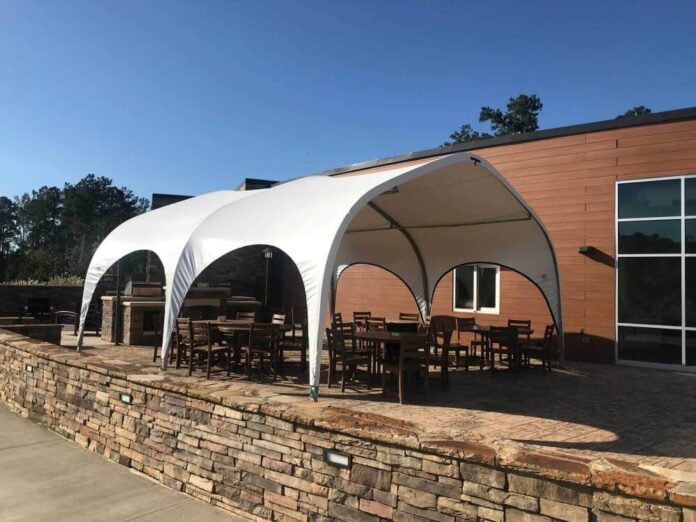
In many industries, outdoor space is no longer a convenience. It is a working asset. Construction yards, mining operations, agricultural sites and logistics hubs increasingly rely on sheltered areas that can be deployed quickly, relocated when needed and withstand demanding conditions from rain to sleet to the beating sun.
As projects scale and timelines tighten, temporary structures are being judged by the same standards as permanent infrastructure. This shift has pushed buyers away from lightweight tents and improvised covers toward engineered canopy systems built for sustained industrial and commercial use rather than short-term or recreational settings.
Why Heavy-Duty Canopies Are Replacing Temporary Shelters
Traditional temporary shelters were designed for short-term use. Pop-up tents and lightweight frames often fail under sustained wind, snow accumulation or daily operational stress. In contrast, heavy-duty canopies are engineered to remain in place for extended periods while maintaining structural integrity.
Industries operating in exposed environments need predictable performance. Mining sites require sheltered maintenance areas that can be deployed without poured foundations. Agricultural operations need equipment protection that adapts seasonally. Construction firms rely on covered staging zones to limit weather-related delays. In each case, durability and modularity matter more than appearance.
This has driven demand for engineered canopy systems built for industrial use rather than events. Businesses looking to buy a heavy duty canopy are typically prioritising load tolerance, structural stability and the ability to relocate the structure as operational needs change recall qualities that lightweight shelters are not designed to provide.
Engineered Fabric Structures as Operational Assets
Engineered fabric structures differ from conventional shelters because they are designed as systems, not accessories. Steel frames provide predictable load distribution, while the fabric membrane acts as a durable weather barrier rather than a disposable cover. This combination allows canopies to perform reliably across different site conditions.
A key advantage is mobility. These structures can often be anchored rather than permanently fixed, allowing relocation as operations shift. For construction firms moving between sites or logistics operators managing overflow storage, that flexibility reduces the need for repeated capital expenditure.
Fabric structures also offer scalability. Modular sizing allows companies to select footprints that match operational needs, whether covering vehicles, equipment or work zones. Over time, additional units can be added without redesigning an entire facility layout.
Use Cases Across Multiple Industries
Heavy-duty canopies are used across a wide range of sectors because their value lies in function rather than industry-specific customisation. In oil and gas, they are commonly deployed as protected workspaces for maintenance crews. In agriculture, they serve as machinery shelters or crop handling areas that adapt to seasonal demand.
Construction companies use canopies to create covered staging zones that reduce weather delays. Logistics and warehousing operations use them to manage overflow inventory during peak periods. In each case, the structure becomes part of the workflow rather than a temporary workaround.
What these industries share is exposure to environmental variables that cannot be controlled. A shelter that fails under wind or snow does more than interrupt work. It introduces safety risks and unplanned costs. Engineered canopy systems are designed to minimise those risks by offering predictable performance.
Durability Without Permanent Foundations
One of the defining features of modern canopy systems is the ability to operate without traditional foundations. This matters in locations where excavation is impractical or where sites must be restored after use. Anchoring systems allow structures to remain stable while avoiding permanent ground disturbance.
For businesses operating on leased land or temporary sites, this is a practical advantage. It allows compliance with land use agreements while still providing robust infrastructure. It also shortens deployment timelines, enabling faster project starts.
Durability is not compromised by this approach. Steel frames and tensioned membranes are engineered to work together, distributing loads efficiently. The result is a structure that behaves more like a permanent building in performance terms, even if it is not fixed in place.
Cost Considerations Beyond Initial Purchase
While heavy-duty canopies typically cost more upfront than lightweight alternatives, their long-term economics are different. Replacement cycles are longer, maintenance requirements are lower and downtime caused by structural failure is reduced.
For operations that rely on continuous outdoor workflows, these factors matter more than headline price. A canopy that lasts years rather than months quickly offsets its initial cost. When relocation is possible, the same structure can be redeployed across multiple projects, further improving return on investment.
Decision-makers increasingly evaluate these structures as capital assets rather than consumables. That shift aligns with broader trends in operational planning, where flexibility and resilience are valued alongside cost control.
Choosing the right canopy involves more than selecting a size. Frame materials, fabric specifications, anchoring options and environmental conditions such as wind or snow loads should guide the decision. When specified correctly, a canopy system integrates into daily operations as a reliable working asset rather than a temporary fix.


